
• There were many reasons for the change of the site software, the biggest was security. The age of the old software also meant no server updates for certain programs. There are many benefits to the new software, one of the biggest is the mobile functionality. Ill fix up some stuff in the coming days, we'll also try to get some of the old addons back or the data imported back into the site like the garage. To create a thread or to reply with a post is basically the same as it was in the prior software. The default style of the site is light colored, but i temporarily added a darker colored style, to change you can find a link at the bottom of the site.

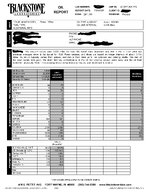
Interesting oil test report. What say you?

AstroTom

Member
For the first time, I sent my 2020 RTL's engine oil off to Blackstone for a report. It's my third oil change since getting the bike used. Current bike mileage is 21,000 miles. Factory filters on each change. On my bikes, I have historically aged out my oils before recommended mileage change out requirements. And because winter was typically a storage time, time interval was annually at the end of the riding season. It's a little different now.

In this case, this report was on Amsoil 10-40, which as you can see only had 3k's use, but in this case, the time interval was 18 months. Over that period, there were good chunks of time when I didn't ride the bike. Note how the oil itself seemed to test fine. Riding history is mixed, with some shorter rides, but all over 25 miles, so the engine always gets up to operating temperature. Riding and storage conditions are all dry environments as the bike resides, and is ridden, in the Arizona Desert, not far from Phoenix. I do my own oil and filter changes. I sent this in at my most recent oil change. This time, I'll be using another high quality synthetic; Motul 7100. One thing I did note, which isn't related to the test results, is using Amsoil, the bike experienced low speed, mild, clutch surging when cold, which was gone by the time I traveled the couple blocks to the main road. At first I thought it was lousy throttle work by me as the Spyder has an unusually weak and sensitive off-idle throttle. It wasn't me. Tried various ways of cracking the throttle to get moving, and at best, all I could do was minimize the surging. Curious if it does the same withing with Motul, but I didn't notice it didn't happen when I pulled the bike into it's storage area after this change. It happened even when the previous oil was new.

Drain plus were quite clean, almost no residue at all. Bike isn't ridden hard, only occasional fun in the twisties. Now storage time is the summer around here. It's just plain too hot for me. Prior to this bike, I've never sent any bike's oil in to get tested, and one year was usually my max between oil changes regardless of the miles ridden, which were always less that manufacturer's intervals, often much less. Frankly extra wear metals might not have concerned me when the bike was brand new, as these can show up as an engine breaks in. I'd like to think 21k and several oil changes both by me and the previous owners would be past break-in time. FYI: The previous owner was meticulous in his maintenance. He passed along excellent records with receipts, so I do have some early history on the bike.

As the title says: What say you? Me? I'm going to stick to a 1 year limit regardless of miles and test again at the next change. Bike runs great and uses very little oil between changes, maybe a few ounces.
20 SPYDER RT.jpg
 
What say I? :unsure:

Two things, well... Three really, if you count the first as being "That looks like a pretty good looking report" ;)

But really, the two following comments could help you come to grips with what that report reveals:

  1. While a 'single snap-shot' oil analysis might provide you with some immediate insight into what's happening inside your engine/trans/clutch (remember, they share the oil!) the real benefit of any oil analysis reports like that comes from the trends revealed by multiple reports taken over time; and
  2. As you've noted, those (seemingly) high iron and aluminium levels shown are often seen in engines that haven't yet really 'bedded in' properly, but remember, Rotax engines, especially these 1330 ACE motors, have a bit of a reputation for taking a looong time to truly 'bed' the pistons and rings in properly! Many 1330 Spyder owners (largely 'quite gentle' riders) have been somewhat surprised at how long/many miles it takes before their Spyder really starts showing the improved performance and better mpg that comes with properly bedded in engines etc, and they're no longer using even the small amount of oil they may have initially seen (many don't ever see any detectable oil usage between changes), all of which are things that generally come into play once the rings & pistons have (finally) fully bedded in with the cylinder walls - some here reporting that this hasn't happened on their Spyder until after 30,000+ miles!
So really, that report as a stand alone 'snap-shot' isn't showing anything surprising, basically just showing that you've been looking after things pretty well, have good oil and air filtration (there's little if any evidence of any sand/airborne contaminants getting in), you are getting/using good fuel, and you're not riding it too hard or getting it too hot. All of which is good stuff for a snap-shot/first glance, albeit still hinting that maybe the engine is still going thru some bedding in (the 'high' iron and aluminium levels), or possibly there's a bit more wear than there should be in an ideal world?! :unsure:

That said, I'd be more interested in seeing how those levels trend, as they really should be at least beginning to taper off by now. But who knows, maybe they have begun tapering off, only you can't see that because you don't have any earlier reports?! Or they could be showing early signs of excessive piston/ring wear, altho if that's the case, this is probably one of the very first 1330 engines to ever have that issue?! :oops:

Mind you, if it was my Spyder & me paying for them, I wouldn't be rushing out to get another oil analysis done tout de suite, probably wouldn't even worry too much if I didn't get one done on the next oil change or even two, either! Even for my relatively high usage/milage diesel engines, I generally only got an oil analysis done on the first couple of oil/filter changes (to make sure I knew the oil was lasting and that nothing drastic was wrong inside) then from there on in, I generally only got an analysis done once every third oil/filter change or so, which helped make any trends, good or bad, very clear!

Maybe this is not much help/anything you didn't already know, but you did ask! ;)
 
Thanks Peter. Your answers were just fine and are helpful. With 21k on the clock, I wondered about the possibility the engine was still wearing in. While I have the original owner's records, what I don't know is how the bike was ridden. If I recall correctly, the bike only had about 12K on the clock when I got it. I didn't actually talk to the previous owner as his son was selling the bike. Got the impression dad wasn't around anymore, so to speak. I know gentle riding can extend break in times. I've never used oil tests on any of my bikes, but have on my previous Diesel pusher RV, and like you, didn't worry about testing every change. Until we retired full timed RVing, and traveling a lot, the oil in it would age out first too, although after one year and a tested sample, I went another season before changing. That's why I've not worried about going longer than one year. This Spyder is a different beast than anything I've ridden before. With all my previous bikes, I've experimented with different brands of oil, and let the bike tell me which one worked best. You'd think similar mechanical things would all react the same regarding oil, but nope, different bikes "liked" different oil. Even had one bike that ran quietest, and shifted the best on inexpensive Walmart brand Supertech, "Synthetic" oil. Next bike, didn't like the stuff. I am quite impressed with the 1330 Rotax ACE. Spins along all day quite happily regardless of the speed. Desert state speed limits are mere suggestions in this part of the country, and sometimes even 10 mph over gets people piling up behind you and getting anxious to pass. Times I've tooled along with traffic at near 90mph, the bike and engine are quite happy. Shhh. Just don't tell anyone about that 90 mph part.

When the temps drop below hellish and riding season returns, I'll be curious how the bike sounds, shifts, and if the clutch surges with this different oil. As before, I just may have to experiment until I find a brand this bike "likes." I appreciate your input.
 
It will be interesting to find out if that surge go's away with your next oil of choice, I am thinking not but good luck!!! Keep us posted!! :cool:
 
Thanks Peter. Your answers were just fine and are helpful. With 21k on the clock, I wondered about the possibility the engine was still wearing in. While I have the original owner's records, what I don't know is how the bike was ridden. If I recall correctly, the bike only had about 12K on the clock when I got it. I didn't actually talk to the previous owner as his son was selling the bike. Got the impression dad wasn't around anymore, so to speak. I know gentle riding can extend break in times. I've never used oil tests on any of my bikes, but have on my previous Diesel pusher RV, and like you, didn't worry about testing every change. Until we retired full timed RVing, and traveling a lot, the oil in it would age out first too, although after one year and a tested sample, I went another season before changing. That's why I've not worried about going longer than one year. This Spyder is a different beast than anything I've ridden before. With all my previous bikes, I've experimented with different brands of oil, and let the bike tell me which one worked best. You'd think similar mechanical things would all react the same regarding oil, but nope, different bikes "liked" different oil. Even had one bike that ran quietest, and shifted the best on inexpensive Walmart brand Supertech, "Synthetic" oil. Next bike, didn't like the stuff. I am quite impressed with the 1330 Rotax ACE. Spins along all day quite happily regardless of the speed. Desert state speed limits are mere suggestions in this part of the country, and sometimes even 10 mph over gets people piling up behind you and getting anxious to pass. Times I've tooled along with traffic at near 90mph, the bike and engine are quite happy. Shhh. Just don't tell anyone about that 90 mph part.

When the temps drop below hellish and riding season returns, I'll be curious how the bike sounds, shifts, and if the clutch surges with this different oil. As before, I just may have to experiment until I find a brand this bike "likes." I appreciate your input.
That Walmart Supertech oil is made to exacting specifications by a major refinery, I forget the name.
 
My 22F3S has the cold start throttle surge since new and now at 10k miles and is a likely a lean mapping from the factory. Once the engine temp starts to show it is gone for the rest of the ride.:)
 
Thanks Peter. Your answers were just fine and are helpful. With 21k on the clock, I wondered about the possibility the engine was still wearing in. While I have the original owner's records, what I don't know is how the bike was ridden. If I recall correctly, the bike only had about 12K on the clock when I got it. I didn't actually talk to the previous owner as his son was selling the bike. Got the impression dad wasn't around anymore, so to speak. I know gentle riding can extend break in times. I've never used oil tests on any of my bikes, but have on my previous Diesel pusher RV, and like you, didn't worry about testing every change. Until we retired full timed RVing, and traveling a lot, the oil in it would age out first too, although after one year and a tested sample, I went another season before changing. That's why I've not worried about going longer than one year. This Spyder is a different beast than anything I've ridden before. With all my previous bikes, I've experimented with different brands of oil, and let the bike tell me which one worked best. You'd think similar mechanical things would all react the same regarding oil, but nope, different bikes "liked" different oil. Even had one bike that ran quietest, and shifted the best on inexpensive Walmart brand Supertech, "Synthetic" oil. Next bike, didn't like the stuff. I am quite impressed with the 1330 Rotax ACE. Spins along all day quite happily regardless of the speed. Desert state speed limits are mere suggestions in this part of the country, and sometimes even 10 mph over gets people piling up behind you and getting anxious to pass. Times I've tooled along with traffic at near 90mph, the bike and engine are quite happy. Shhh. Just don't tell anyone about that 90 mph part.

When the temps drop below hellish and riding season returns, I'll be curious how the bike sounds, shifts, and if the clutch surges with this different oil. As before, I just may have to experiment until I find a brand this bike "likes." I appreciate your input.
One way to find which class of base stock a “full” synthetic oil is based upon, highly refined dinosaur juice or truly synthetic oil is to get the safety sheet for the oil in question. Oil companies are required to supply that upon demand

I was curious about the XPS branded BRP new “fully” synthetic oil as supplied by Can Am. In the US “fully” synthetic is just a marketing term used to describe an oil that performs as per a truly synthetic oil despite being just highly refined regular oil. It turns out the XPS “fully” synthetic is merely highly refined class 3 stock, not fully synthetic class 4 or 5 stock.

However, this does not mean the “not really fully synthetic” oil is necessarily a bad oil in the real world. I think this highly refined class of regular oil is where a great deal of variation in how and oil feels comes from, especially when it comes to the level of refinement and more importantly the additive packages they use to help simulate class 4 based full synthetic stock, which again is a different feel in itself.

I just ask the oil manufacturers from their “contact us” form on their websites for an oil safety sheet and I usually get a response within a day or two as that’s what they need to provide to the general public upon demand, as to opposed to what they have to provide to shops using their oil in their business.

I’m under warranty with my Spyder and will continue to use XPS “almost fully synthetic” oil without worry. I just change it every 5,000 miles as a) I live in a harsh climate, and b) because I think I will have exhausted a lot of its sheer strength due to it being shared with the transmission which sheers oil a lot.

If your mileage is low and you store your bike over the winter, whether you feel like it needs an oil change in the spring might, to my mind, be down to the type of oil and its particular additive packages, as well as the humidity and temperature the bike is stored at and therefore how much moisture is deposited into the oil. I don’t start the bike at all over the winter to avoid condensing moisture into the oil.

For me, with the XPS “fully” synthetic oil, I just stick to 5,000 miles intervals and not worry about the storage season. But that’s just me. I live in a low humidity desert climate and the first ride of the season is enough to get the oil hot and boil off any moisture, and go far enough to get through a tank of gas to get a fresh fill up.

Usually bike and car manufacturers have a recommended brand and specification. On the whole, but not always, I find the oil recommended by brand tends to run best that vehicle. Things like Honda oil seemed to work well in Hondas. Yamalube well in Yamahas. My Range Rover likes the JLR specified Castrol. There are exceptions of course, like Shell T6 Rotella, which seems to perform admirably in just about anything. From experience Costco’s Kirkland oil seems fine for Hyundai cars, Amazon Basics oil certainly did not. Each vehicle has different tolerances and operating conditions and I think the additive packages may suit one vehicle more than another without it being necessarily a bad oil. I suspect oil filter quality is also a significant factor.
 
Back
Top