• There were many reasons for the change of the site software, the biggest was security. The age of the old software also meant no server updates for certain programs. There are many benefits to the new software, one of the biggest is the mobile functionality. Ill fix up some stuff in the coming days, we'll also try to get some of the old addons back or the data imported back into the site like the garage. To create a thread or to reply with a post is basically the same as it was in the prior software. The default style of the site is light colored, but i temporarily added a darker colored style, to change you can find a link at the bottom of the site.

Totally bonkers 'Miles to empty' on 2020+ Spyder - can it be fixed?

If you fill up a tank and ride at exactly the same speed for the entire ride it will be pretty close. The issue is that it is adjusting based on your current speed which is usually varying during a ride. Like was said, watch your odometer and use that as determining when to stop for fuel, or in my case, when Momma wants to stretch.
 
I'm averaging 30+ miles per gallon. So on a refill with a full tank (7 gallons) and 30+ mpg the estimated Miles to Empty should read 210+ miles, however mine only shows 170 miles? Any suggestions/ Oh, my bike is a new 2026 RT S2S and I've currently ridden 350 miles
 
It does this on my bike too. I assume it is computing the fuel range using the average fuel consumption I was getting in the past so many miles or so much a time period. My Range Rover does this too.

As I ride for a while, the predicted miles until empty seems to correct itself and make more sense. I'd love to know the algorithm.
 
The "miles to empty" feature is wildly inaccurate.
Best to keep track of miles on the trip meter and calculate in your head. The miles to empty has always been very pessimistic for me. I've been down to 30 miles on mine and barely put 5 gallons in. I get about 39 mpg, which tells me I really had close to 79 miles left in the tank.
I would not run it that low, but here in the western US it's important to know what's really in the tank. We often ride roads that have long distances between services.
 
The wife and I rode maybe 75 miles this morning and getting back to our home town the Spyder was down to one red bar on the fuel gauge and It was intermently flashing a low fuel message in the top right corner of the display screen. I pulled into the Shell station and was only able to put 5.2 gallons in the tank so with that said I could have easily got another 50 miles before running out. I think the gauge is calibrated to get the rider to fuel up way before the chance of running out occurs. I've been running 93 octane since new and don't like running the tank near empty so I kinda like the way the gauge is calibrated. 5.2 gallons is the most I have ever toped it off to.
 
Many of you seem to forget that you REALLY don't ever want to run out of gas in your Spyder, as doing that WILL damage things; and even if you are lucky enough to avoid your engine needing expensive repairs (or maybe scrapping) now, the damage caused by running out of gas, or maybe even just running low on gas, is irreversible, cumulative, and in the majority of instances, ultimately terminal! 😖

You always NEED to have at least a couple of litres of gas remaining in your tank, as the fuel system uses that remaining fuel as both coolant and lubricant, and all the damaging contaminants end up in the bottom of the tank, meaning that if you get down too low in the gas remaining, bad things will start to happen to your engine, or maybe even happen now! So if you think you could've still run for about another 50 miles on what gas was remaining in the tank, that's about your last opportunity to safely fill if you don't want to damage things! Anything much less than that is getting pretty risky! :oops:

There's a lot more discussion on this that's already been posted here on the Forum, so I won't re-iterate it, Search is your friend; but seriously, don't be the sucker who continually runs their tank down to empty or even almost empty; you should definitely be starting looking to fill up by the time it hits about 1/4 of a tank remaining, and if you're looking at buying a used Spyder, don't be the poor sap who buys a Spyder that's run out or been run down too low in the gas remaining too often! I'd suggest steering well clear of one that the seller admits has ever been run dry! :eek:

Just Sayin' - Again!! 😣
 
Just set one of the trip miles to zero when you fill up and when it gets to around 250, fill up again. Do that every time you get gas, or if you stop for gas early, set it to Zero then. That is the way we kept up with it before bikes had gas gauges. It you ride more in the city or pull a trailer some, it will make the miles really stupid on the Can Am miles to empty numbers. Anything that changes the normal routine will confuse the computer, which was not that bright before it got confused. Mine will take about 4.5 to 5 gallons somewhere around 235 miles. It depends if I've been pulling the trailer much or riding the crooked roads where you drop down to 3rd and power back out of the curves.
That's 47+ mpg. How on earth are you getting that mileage??? :eek:
 
Many of you seem to forget that you REALLY don't ever want to run out of gas in your Spyder, as doing that WILL damage things; and even if you are lucky enough to avoid your engine needing expensive repairs (or maybe scrapping) now, the damage caused by running out of gas, or maybe even just running low on gas, is irreversible, cumulative, and in the majority of instances, ultimately terminal! 😖

You always NEED to have at least a couple of litres of gas remaining in your tank, as the fuel system uses that remaining fuel as both coolant and lubricant, and all the damaging contaminants end up in the bottom of the tank, meaning that if you get down too low in the gas remaining, bad things will start to happen to your engine, or maybe even happen now! So if you think you could've still run for about another 50 miles on what gas was remaining in the tank, that's about your last opportunity to safely fill if you don't want to damage things! Anything much less than that is getting pretty risky! :oops:

There's a lot more discussion on this that's already been posted here on the Forum, so I won't re-iterate it, Search is your friend; but seriously, don't be the sucker who continually runs their tank down to empty or even almost empty; you should definitely be starting looking to fill up by the time it hits about 1/4 of a tank remaining, and if you're looking at buying a used Spyder, don't be the poor sap who buys a Spyder that's run out or been run down too low in the gas remaining too often! I'd suggest steering well clear of one that the seller admits has ever been run dry! :eek:

Just Sayin' - Again!! 😣
I used to be this type of person, running till fumes were almost used up. That changed back in 1993 when I was on vacation 1200 miles away from home when the electric fuel pump gave up on my pickup truck due to my low volume of gas keeping the pump cool. I purchased the truck new so it was totally my fault. It is very rare on any vehicle since that time I let my fuel tank get less than 1/2 full. No fuel pump problems since I have kept plenty of fuel in the tank which keeps the fuel pump cool.
 
.Well, I get 39 to 41 MPG depending on how frisky I want to be. This is with a Stage 1 ECU flash, intake, and exhaust mods. No fancy DTE on my 2014 RTS, but my 79-year-old unpadded butt is planning to stop for fuel well before the gauge is reading anywhere near empty (which it never has).
 
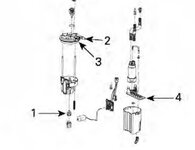
You always NEED to have at least a couple of litres of gas remaining in your tank, as the fuel system uses that remaining fuel as both coolant and lubricant, and all the damaging contaminants end up in the bottom of the tank, meaning that if you get down too low in the gas remaining, bad things will start to happen to your engine, or maybe even happen now!

Just Sayin' - Again!! 😣
While I agree on the fact that the fuel is used to lubricate and cool the fuel pump, I contend that the pump always draws from the bottom of the tank so the contaminants are not a factor in running the fuel down low. That is why you have a fuel filter. They are always there and are sucked up (the sock catches the big chunks) even with a full tank. Now sloshing of a fuller tank may spread the distribution of the contaminants but they are still there in a flat bottomed tank.
 
While I agree on the fact that the fuel is used to lubricate and cool the fuel pump, I contend that the pump always draws from the bottom of the tank so the contaminants are not a factor in running the fuel down low. That is why you have a fuel filter. They are always there and are sucked up (the sock catches the big chunks) even with a full tank. Now sloshing of a fuller tank may spread the distribution of the contaminants but they are still there in a flat bottomed tank.

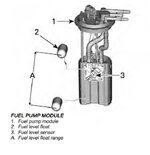
Actually, if you look at where the pick-up is on most fuel tanks, it's a little bit ABOVE the bottom of the tank - the opening generally clears the bottom by at least 1/2 an inch or so, even when the pick-up is in a 'corral' or some sort of lowered section of the tank base; and while there's a fair bit of gas left in the tank, even given that there's some movement and sloshing around of the gas remaining in the tank, while ever there's a fair bit of gas remaining, the scungy, manky stuff suspended in the fluid and any liquid contaminants unable to be dissolved in the gas (like water, condensation, et al) all tends to stay down below that slightly raised pick-up, so that the gas generally pretty much shows a distinct 'line of separation' between the gas that's being sucked up by the fuel system and that watery, contaminated stuff that you really don't want to be sucked into your fuel system. If you think about this, it's actually a pretty nifty piece of design - simply by raising the fuel pick-up a bit ABOVE the bottom of the tank, the larger volume of gas in your tank separates out the manky stuff and doesn't suck it up into the fuel system - normally! ;)

BUT, once the level of gas left in the tank starts getting down a fair bit, the sloshing around of what little 'good' gas is left in the tank tends to become waaayyy more active and agitated than it was when the level was up above about 1/4 of a tank full even with the gentlest of riding/driving!! A full tank of gas usually has very little 'free surface effect', but that sloshing increases exponentially as the level drops! :oops: And that tends to stir up all the scungy, manky, contaminated stuff that basically remained settled down below the pick-up tube while the gas tank was closer to full, stirring it in with all the good stuff that you DO want your engine to run on more and more the closer you get to empty, and it's THAT stirring, agitating, and mixing in of all the manky, contaminated stuff that happens once the remaining fuel level gets low that basically FORCES your fuel system to suck in all the nasties in a way that it doesn't normally!! :eek:

Add to that the fact that the larger volume of gas in a tank with more than 1/4 of its capacity remaining can fairly easily disperse all the heat generated by the fuel pump etc (and I'm pretty sure that most of you'd be surprised at how much that heat generated actually is! 😣) but once the fuel remaining level starts to get low enough, not only does the act of riding/driving start mixing in all the scungy stuff, but since most of the 'contaminant' type stuff is also usually watery, what little fuel is left fairly quickly starts to heat up and have a much harder time keeping all the important bits of your fuel system cool and lubricated! By design, this is not usually a major issue while the gas in the tank level is anything closer to full than about 1/4, but once the level of gas remaining drops much below that, it starts to rapidly become a problem, a REAL problem! And that is why most vehicle manufacturers 'glovebox manuals' usually have an admonition in them somewhere that basically tells you to NEVER run your gas tank dry, or to always keep at least 1/4 of the indicated tank full of gas in the tank, &/or to fill up before your gas tank gets much lower!! :rolleyes:

Just Sayin'... Again! ;)

Ps: Most manufacturers who install gas gauges these days, BRP included, do tend to build this 'necessary fuel remaining' level into their gas gauge display and their low fuel warning light triggers in the hope that most drivers out there will heed the gauge &/or warning and top up before the remaining fuel level gets too low to cause too much immediate damage - they don't really seem to mind a whole lot about the low level damage that might occur (especially early in the piece) if you run just a little low, I guess cos while that damage, once started, is irreversible and simply gets worse over time, they're well aware that it usually won't become a significant performance degradation &/or a major concern until after their warranty runs out!! :rolleyes:

So they're generally happy enough if you're silly enough to run the level too low occasionally, or just a bit, but you might be surprised about the records they keep if you ever let on that you ran it absolutely dry, especially in the first few weeks of ownership, or if one of your on-board computers rats you out! And just between you'n me, those bloody sneaky computers DO do that! 🤬 That 'running dry' thing is something they really want recorded, and if you happen to get sprung having done that, it can be the reason all sorts of potentially expensive warranty claims are either refused outright, or at least vehemently argued that it was your actions that caused the issue! 😖
 
Back
Top