• There were many reasons for the change of the site software, the biggest was security. The age of the old software also meant no server updates for certain programs. There are many benefits to the new software, one of the biggest is the mobile functionality. Ill fix up some stuff in the coming days, we'll also try to get some of the old addons back or the data imported back into the site like the garage. To create a thread or to reply with a post is basically the same as it was in the prior software. The default style of the site is light colored, but i temporarily added a darker colored style, to change you can find a link at the bottom of the site.

Am I being too cheap by Not changing the filters on a low milage oil change?

scubadown

Member
I put about 1500 miles a year on my 2013 STL with the 998 engine. Total miles are now about 17,000. The last two years, I put in fresh full syn oil yearly, but did not change the two filters. I'm thinking of changing the oil again this year and also not changing the filters, as it is easier and cheaper. The oil always looks good and I don't have to add any oil between changes, which seems to be unusual (but great) for the 998 engine. Am I being too cheap?
 
Last edited:
I know where you're coming from and understand your rationale, but I think its false economy. If you're changing the oil, what's another <$30 for a filter.
Different vehicle but my neighbour is the same way re his lawn tractor. He puts about 20-30 hours on it a year and changes the oil every other year... maybe. I don't think he bothers with the filter.
Me, I change the oil and filter every year on my Spyder, putting about 6-8K on every year (not much I know), my ZT is every year, and my truck is every 12K. Not changing the oil and filter is a poor way to save money, IMHO! :)
 
One can't tell a tinker's damn from the "looks" of motor oil. That's why owners who really want to know how their oils is performing have it analyzed, but it isn't free. If you want to save $$ purchase your supplies from Baja Ron. If I rode my Spyder as little as you do I would sell it as you have too much tied up in insurance overhead.
 
Agree with Jay, unless they're getting their oil tested, they won’t actually know what they're saving or not. Sorry, but I don’t see any actual saving, when the oil/filter change is incomplete. Yes, a yearly change is required, but pushing it though with a 3yr old filter... The filter's can degrade too, they're not built to last. I'm not sure if both filters need changing every time tho. Please Ron, what say you?
 
I think he's going to tell you he goes by mileage not year! If you're using a GOOD oil, you can stretch it out, but if you're going to do a change, then do a change, with the filters! A full synthetic oil doesn't break down like the old stuff and the way we used to think is hard to break for us dinosaurs. 1000 miles a year means you haven't even got the oil hot! That's my 2 cents! 🙃
 
My RTL has the 1330 engine and the change interval for the oil and filter is 9,300 miles and the HCM filter ($128) is every 3rd oil change. I pulled my latest sample for analysis with the engine running at exactly 9,300 miles and the viscosity was still spot on and the only slightly elevated level was iron. Their recommendation was "Oil suitable for continued use." I ended up changing it at 10,300 miles with no visible accumulation on the magnetic plugs. I do not use the bike as my grocery getter or to have coffee with the boyz. It almost only comes out when I am going at least 50 miles round trip. To reduce costs, I am now going to change the HCM filter at the 4th oil change. I use Amsoil 10W40.
 
Agree with Jay, unless they're getting their oil tested, they won’t actually know what they're saving or not. Sorry, but I don’t see any actual saving, when the oil/filter change is incomplete. Yes, a yearly change is required, but pushing it though with a 3yr old filter... The filter's can degrade too, they're not built to last. I'm not sure if both filters need changing every time tho. Please Ron, what say you?
I was trying to stay away from this one. Thank you, Bfromia. ;)

My primary opinion has always been, 'It's your ride, do what you like.' However, in some cases this can mean job security for repair shops. Nor am I here to talk anyone into or out of their chosen approach. I try to stick to the facts and what I feel is the most practical path forward.

As mentioned, saving a few bucks does not always produce thrift. It depends heavily on how it is done.

The Rotax engine is very robust. It can take quite a bit of abuse. Like flogging the throttle. The Rotax actually likes that. But cheaping out on lubricants and oil/filter change intervals can be counter-productive.

Then there is the eternal debate about 'Oil is Oil'. And all the different opinions in that realm, as the misinformation in this area is legendary. As has already been mentioned, this is easily discovered when you have various products professionally analyzed. There is a huge spectrum of quality in lubricants. Without getting an analysis, it’s just guessing.

So, to the OP’s question. He says he’s using ‘Full Synthetic’ oil. Which is, I am sure, what it says on the bottle. They can’t put it on the bottle if it isn’t true, right?

But your engine isn’t reading the bottle. And most likely, it isn’t really synthetic. Instead, it’s probably a Group III, mineral based oil. You don’t get the same protection from Group III that you do from a true synthetic made with Group IV, Ester based lubricants.
  • Ester molecules are polar and magnetically cling to metal parts to protect engines during cold starts. This also protects internal parts against moisture and potential rust.
  • Ester provides natural detergency that actively dissolves varnish and carbon. No need for an additive to accomplish this task.
  • Ester handles extreme high-heat abuse well and leaves behind fewer deposits when burned. This is especially important in an engine like the 998 that burns oil.
Then you have the variables between the 998 V-Twin engine and the current 1330. In some cases, this makes a big difference. Be sure you're applying advise correctly.

1,500 miles isn’t much. But I would say that time will affect your oil more than your filters. This depends on the oil, of course, and the environment your Spyder lives in. How long it sits between rides that get the oil to operating temperature will also make a difference.

But for my 2 cents. What the OP is doing isn’t the end of the world. Still, if savings is the goal, using a true synthetic oil like Amsoil would cut down on cost and maintenance time as well. You can go 10k and you don’t have to worry about time. I know this goes against the consensus. But I’m already long here, and I’ve explained my rationale for this statement elsewhere.

 
Last edited:
The one thing I learned in riding a Harley is Oil & Filter is cheaper than a motor. Granted it's Air cooled vs Water cooled but the principle is the same. I always change my oil earlier than recommended. Amsoil is amazing, and run it in the Spyder, Ultra Classic and even my Mini Cooper Countryman.
 
The one thing I learned in riding a Harley is Oil & Filter is cheaper than a motor. Granted it's Air cooled vs Water cooled but the principle is the same. I always change my oil earlier than recommended. Amsoil is amazing, and run it in the Spyder, Ultra Classic and even my Mini Cooper Countryman.
You are correct in the extreme! Air cooled is definitely a game changer. Remember back when all motorcycles were air cooled? Wow! I'm really getting old! :cool:

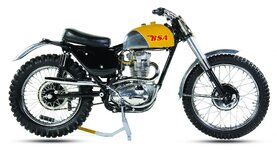
I see you have a BSA in your lineup. I had a 441 Victor. What a BEAST!

I'm not sure what it was a victor over. But it sure was a ride to remember. They called my single seat 'The Canned Ham'. Everyone wanted to ride it. But no one wanted to start it. It would launch you into the air or break your leg if you did it wrong.

79mm Bore
90mm Stroke

Tons of torque. You could not stop that motor.


441 BSA Victor.jpg
 
Last edited:
My brother who rides a HD trike and uses an independent mechanic switched over him over to Amsoil for the engine, primary and tranny. He claims he can find N so much easier than before!
 
My brother who rides a HD trike and uses an independent mechanic switched over him over to Amsoil for the engine, primary and tranny. He claims he can find N so much easier than before!
Yes! On the Ultra I run it in all 3 holes (Engine, Tranny and Primary case). When shifting gears, I don't get that "Clunk" anymore. It shifts like butter. I had to tear done my 02 Roadking Motor at 50K because I toasted the top end. I was coming back from Yellowstone (Sturgis Rally trip) running it really hard (80+ 2up) and cracked the intake manifold. When I checked the crank and rod bearings, they honestly had very little wear to them using Amsoil 20/50 100% Synthetic V-twin. I change my Tranny oil every other engine/primary oil change. I live in So Calif and the summers are brutal at times. On the Harley, they say 5K, I always change it at 3K. On the Spyder (for me) it's every 5000 miles OR once a year, whichever comes first. IMHO of course :)
 
You are correct in the extreme! Air cooled is definitely a game changer. Remember back when all motorcycles were air cooled? Wow! I'm really getting old! :cool:

I see you have a BSA in your lineup. I had a 441 Victor. What a BEAST!

I'm not sure what it was a victor over. But it sure was a ride to remember. They called my single seat 'The Canned Ham'. Everyone wanted to ride it. But no one wanted to start it. It would launch you into the air or break your leg if you did it wrong.

79mm Bore
90mm Stroke

Tons of torque. You could not stop that motor.


View attachment 256993
The 441 was an absolute beast! Yes the "kickback" from the kick starter was ugly. I went limping away from it a few times. My buddy had one as a dirt bike, you'd hear him climbing a hill with the "dhut, dhut dhut dhut" single piston just thumping away. Crazy torque! It could climb anything! We both rode in the Mojave desert doing enduos and riding in the back of Edawrds AFB looking at the crashed experimental planes. I rode a 1971 Ossa Stiletto 250. It was a desert tank but couldn't climb like the BSA Victor.
 
Last edited:
I was trying to stay away from this one. Thank you, Bfromia. ;)

My primary opinion has always been, 'It's your ride, do what you like.' However, in some cases this can mean job security for repair shops. Nor am I here to talk anyone into or out of their chosen approach. I try to stick to the facts and what I feel is the most practical path forward.

As mentioned, saving a few bucks does not always produce thrift. It depends heavily on how it is done.

The Rotax engine is very robust. It can take quite a bit of abuse. Like flogging the throttle. The Rotax actually likes that. But cheaping out on lubricants and oil/filter change intervals can be counter-productive.

Then there is the eternal debate about 'Oil is Oil'. And all the different opinions in that realm, as the misinformation in this area is legendary. As has already been mentioned, this is easily discovered when you have various products professionally analyzed. There is a huge spectrum of quality in lubricants. Without getting an analysis, it’s just guessing.

So, to the OP’s question. He says he’s using ‘Full Synthetic’ oil. Which is, I am sure, what it says on the bottle. They can’t put it on the bottle if it isn’t true, right?

But your engine isn’t reading the bottle. And most likely, it isn’t really synthetic. Instead, it’s probably a Group III, mineral based oil. You don’t get the same protection from Group III that you do from a true synthetic made with Group IV, Ester based lubricants.
  • Ester molecules are polar and magnetically cling to metal parts to protect engines during cold starts. This also protects internal parts against moisture and potential rust.
  • Ester provides natural detergency that actively dissolves varnish and carbon. No need for an additive to accomplish this task.
  • Ester handles extreme high-heat abuse well and leaves behind fewer deposits when burned. This is especially important in an engine like the 998 that burns oil.
Then you have the variables between the 998 V-Twin engine and the current 1330. In some cases, this makes a big difference. Be sure you're applying advise correctly.

1,500 miles isn’t much. But I would say that time will affect your oil more than your filters. This depends on the oil, of course, and the environment your Spyder lives in. How long it sits between rides that get the oil to operating temperature will also make a difference.

But for my 2 cents. What the OP is doing isn’t the end of the world. Still, if savings is the goal, using a true synthetic oil like Amsoil would cut down on cost and maintenance time as well. You can go 10k and you don’t have to worry about time. I know this goes against the consensus. But I’m already long here, and I’ve explained my rationale for this statement elsewhere.
Was hoping to verify if both filters needed changing every every time, was not trying to drag you out. Thank you for the expertise.
 
Was hoping to verify if both filters needed changing every every time, was not trying to drag you out. Thank you for the expertise.
Both filters should be changed with every recommended interval oil service on the 998. Original manual stated every other oil change for the HCM filter. But they started having hydualic shift valves fail, so they ammended that in later years.
 
Both filters should be changed with every recommended interval oil service on the 998. Original manual stated every other oil change for the HCM filter. But they started having hydualic shift valves fail, so they ammended that in later years.
Thank you
 
Back
Top