• There were many reasons for the change of the site software, the biggest was security. The age of the old software also meant no server updates for certain programs. There are many benefits to the new software, one of the biggest is the mobile functionality. Ill fix up some stuff in the coming days, we'll also try to get some of the old addons back or the data imported back into the site like the garage. To create a thread or to reply with a post is basically the same as it was in the prior software. The default style of the site is light colored, but i temporarily added a darker colored style, to change you can find a link at the bottom of the site.

PedalBox and Pedal Commander - what do they do and how do they work?

Fuel consumption is already fairly lame on my Rally so I'll pass on fitting a gadget that makes it drink even quicker. Then again...maybe in a few years though, once I've learnt to ride it round corners properly.....

Personally, I don't think the Ryker needs a throttle modifier. It comes stock with a pretty responsive throttle. Probably more due to the CVT than the ECU. Apples and Oranges between the 2 machines. We've put some Pedal Boxes on Rykers. But we always try to enlighten customers with our opinion that they are not necessary before doing so.
 
where I really appreciate the improved throttle response is for passing cars out on the highway. Arizona has a lot of up and down riding and finding a spot to pass a slow moving vehicle is not always easy. Having a quicker throttle response certainly helps.
 
Assuming the above is correct (no reason to doubt it), I was wrong. Thanks for setting me straight. :cheers:
:cheers:
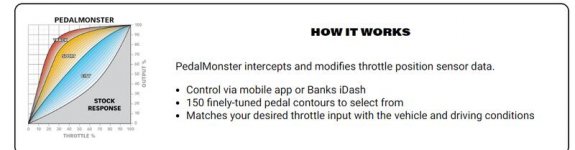
You're not wrong. These boxes work exactly as you have described. The box manufacturers have charts on their websites that show exactly that.


Interesting video. Let's look very closely at what is happening here.

While he talks about pressing the accelerator pedal rapidly, he never does that. The accelerator pedal is actually being pressed fairly slowly. The butterfly valve then naturally moves fairly slowly in response. If he would have pressed the pedal rapidly to the floor, the butterfly would have opened very rapidly. (He is using a demo setup and never tests how rapidly the butterfly can open in stock. I made measurements in the real world on my Ryker and showed that the butterfly can and does in fact open in the blink of an eye.)

Next, he turns on the box. But, he presses the pedal at about the same rate. Because the box amplifies the pedal signal, in the time it took for the pedal to move just 20% the box delivers an 80% signal to the ECU - of course the butterfly is going to open more, just as it would if he pressed 80% unmodified. In effect, he has pressed the pedal much more rapidly. That is what these boxes do - increase pedal sensitivity. A more sensitive pedal requires much less travel to send the same signal to the ECU. This gives the perception that the butterfly is opening faster.

This demo never illustrates what actually would happen if you press rapidly to the floor.

Banks.jpg
 
Last edited by a moderator:
I'm a late-comer here, but I've been reading this thread with interest. I've been trying to decide whether to try one of these devices on my 2024 Spyder RTL, purchased last September.

“After installing a Pedal Box or Commander unit, you can manage the rate at which the throttle bodies open up to, and even beyond, a 1 to 1 ratio.”

No, you cannot. You are managing the amount that TAS increases with rotation of the twist grip. The ECM manages the throttle body butterfly valve based, among many other things, the TAS. You are changing the relationship between twist grip angle and TAS, that is all. The ECM is going to react the same with the same TAS input. How can it not?
Are you certain of this? I write embedded firmware for a living. If I were making an ECU I might be inclined to include not only TAS voltage (V), but also the rate of change with respect to time of the TAS voltage (dV/dt). The PedalBox and Pedal Commander make it possible to achieve greater dV/dt than is possible without them, it could be that the ECU actually is opening the butterfly faster with them. Peoples' reported experience with these devices supports this idea.

I'm not saying you're wrong. I'm just saying that I'm not convinced.
 
I'm a late-comer here, but I've been reading this thread with interest. I've been trying to decide whether to try one of these devices on my 2024 Spyder RTL, purchased last September.


Are you certain of this? I write embedded firmware for a living. If I were making an ECU I might be inclined to include not only TAS voltage (V), but also the rate of change with respect to time of the TAS voltage (dV/dt). The PedalBox and Pedal Commander make it possible to achieve greater dV/dt than is possible without them, it could be that the ECU actually is opening the butterfly faster with them. Peoples' reported experience with these devices supports this idea.

I'm not saying you're wrong. I'm just saying that I'm not convinced.
Yes, I am certain. I was also in the embedded firmware business for 35 years.

Let me try to convince you.

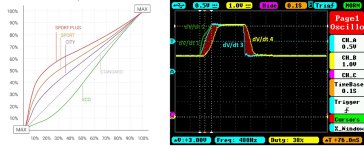
Using Pedal Box's chart, I copied their most aggressive curve (Sport mode) onto the test results from my Ryker. The blue line is stock Ryker TAS and the green line is Pedal Box Sport mode TAS. While Sport mode dV/dt is initially greater than stock (dV/dt 1), it is slower than stock later (dV/dt 2). To achieve maximum (100%) TAS (and therefore maximum power), the twist grip must be twisted 100% in either case, with or without the boxes. The dV/dt time to maximum TAS voltage is identical.

Does the early greater TAS dV/dt have an impact? Looking at dV/dt 3, that is the rate of change in TAS of my stock Ryker twist grip snapping back from 100% twist. Note that the curve is almost a step function, and the absolute value of the stock TAS dV/dt is as great or greater than initial Sport mode TAS. Yet dV/dt 4 (the yellow line is TPS), the maximum slew rate of the butterfly, is much less. This is because, as I explained, the throttle body motor speed has a limit. So, while you are correct in that you can achieve a greater TAS dV/dt with a box for about 20 ms, it has no effect on the maximum speed of the butterfly.

The boxes do not make it possible to achieve greater dV/dt of the TPS (butterfly) than is possible without them, and of course that is what matters.


Pedal Box.jpgPedal Box.jpg
 
Here's the deal with no charts or computers to tell me what I'm not feeling.
When I turn my PB Off while riding through town it feels like I threw an anchor out. It feels very sluggish compared to when the PB is on.
 
Well it seems to me that you can accomplish the PB feeling by using more wrist, which is free, just a matter of getting used to if that is how you like to ride. JMO
I prefer the stage 2 MFI tune in the standard mode; it provides a good throttle response as well as a nice increase in performance when I want to use my wrist a bit more. ;)
 
Well it seems to me that you can accomplish the PB feeling by using more wrist, which is free, just a matter of getting used to if that is how you like to ride. JMO
I prefer the stage 2 MFI tune in the standard mode; it provides a good throttle response as well as a nice increase in performance when I want to use my wrist a bit more. ;)
Hahahaha classic. Ever heard of a 1/4 twist throttle assembly? That's what I've had on all my motorcycles and that came stock. The PB is my 1/4 throttle. That's all. I understand it. I have no desire to twist the throttle all the way around just to get moving fast. The PB makes this process very easy and smooth.
 
Last edited:
My Pedal Commander on my Dodge Daytona Charger will snap your neck! :cool:

I have one in my garage waiting to be installed on my Spyder F3-S.
 
Assuming both starters twist the grip 100%, the ECU sees the same TAS and responds the same. Tie.
I haven't tried a side by side comparison, but just installed the PB Pro on my 2025 RT S2S and it gets from 0-60 much faster. Definitely more zippy and faster off the mark. I would put my $$ on the Spyder modified (with PB) over stock for sure.
 
I haven't tried a side by side comparison, but just installed the PB Pro on my 2025 RT S2S and it gets from 0-60 much faster. Definitely more zippy and faster off the mark. I would put my $$ on the Spyder modified (with PB) over stock for sure.

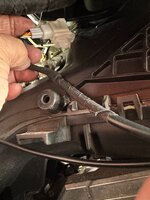
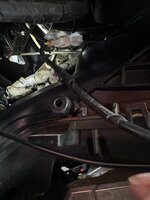
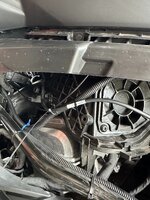
I can't find the throttle connector to hook in the pedal commander on my 2025 RT S2S. ANY help would be appreciated
 
True dat! :sour: But it's just like weeding out some of the dodgy 'new member' applicants - there's always gonna be more trying, it's a never ending and seemingly futile task, but if someone doesn't do it, it won't take long before the Forum gets inundated by them, all the legit users get driven away, and the place becomes useless! Only with those dodgy applicants, they have no reason to not try, cos their life is otherwise so pitiful that their main goal is to be a pain & disrupt/destroy places like this! :banghead:

But with current valid members & legit users of the Forum, it's to their benefit not to start up a brand-new thread every time they think of something else about a subject that's already been raised and discussed; it's to their benefit to actually LOOK for and at what's already been posted about a subject; to check out what's already been asked, discussed, and possibly even already answered; and maybe they'll learn something along the way, possibly even answer any other questions they might have/that might arise, cos after all, that's one of the big advantages of Forums like this, it's a continually growing and expanding data base of actual experience and knowledge about our shared interest, BUT IT ONLY WORKS IF the Forum is at least vaguely organised and searchable!:lecturef_smilie:

So not only is it to the benefit of each and every poster to search first and preferably add to existing threads where their question will expand that knowledge/experience database, instead of just starting another thread just cos they haven't asked the same old question yet... but it's also a basic courtesy to all the other members here to at least TRY not to mess the place up by drowning it in repetitions of the same old questions, answers, discussions etc and basically contribute to making the place unusable for everyone else thru their selfishness & laziness! :mad: Even if we are lucky enough to catch most of them before they do a heap of damage, we get enough of the small-minded spam/scam types who actively try doing that anyway, so I'd like to think that most valid members here also think the Forum is valuable enough & helpful enough to them for each of them to make that little bit of extra effort not to actively contribute to its eventual destruction! :shocked:

It might be naive of me; possibly even a futile task, as you've commented (I'm beginning to think that herding cats is likely easier! :p ); but even if it only shows a few that there are some here who appreciate the place and want it to keep going, then I'm all for it!! And if it actually helps keep the place working, all the better - I reckon it's worth giving it a shot, don't you?? :rolleyes:
If you can actually herd cats, that will be good practice for herding rabbits?

By the way, we all appreciate what you do as a moderator, I'm sure a) it takes a lot of time, and b) it takes a lot of patience.

🐱🐰
 
Last edited:
From what I understand at least for 2024+ bikes it works like the Bosch ride by wire systems, which it probably is.

The throttle when it changes position is converted into a digital signal by the TAS.

Ignoring all the safety sensors within the TAS, what happens is the TAS sends messages at a constant rate via CanBus to the ECU report amongst other things, the percentage the throttle is open. Say at 10ms intervals.

The ECU monitors these messages and controls the throttle body. It sends continuous messages to the throttle body via CanBus.

Now we insert a pedal commander. This takes the CanBus messages from the TAS to the ECU, re-writes the throttle position, recomputes the checksum and forwards it to the ECU. It doesn't change the data rate of the CanBus messages as to do so would probably cause problems with the ECU message checking. The TAS and the ECU take a lot of care to verify the message frequency and integrity in order to not have a fault TAS or the throttle position sensor within the TAS from making the machine go crazy on a fault.

So, effectively the Pedal Monster is playing a piggy in the middle attack by rewriting CanBus messages from the TAS to the ECU.

All this comes from how standard Robert Bosch systems seem to work, and I would be very surprised if the Can Am system wasn't Bosch or a very similar system.

Now the ECU is smart. None of us know if the ECU takes note of how quickly the CanBus messages containing increasing or decreasing values mean something to the ECU. If the ECU suddenly sees percentage throttle open positions change very rapidly it might use that rate of change internally to do things, like prepare the nanny to consider that for traction purposes. The ECU may know the rate of change it can encode in messages to the throttle bodies to stop them from ramming open and potentially sticking. The percent changes in the TAS message stream may or may not be exactly the rate of change between the ECU and the throttle bodies. The non linear curve in the TAS or Pedal Box values may not be the same as the non linear curve from the ECU to the throttle bodies. I actually doubt if it as the ECU has lots of things to calculate between the TAS and the throttle bodies, including the fuel maps, fuel quality, the air temperature, the coolant temperature, ignition timing data, ignition knock, the bikes stability sensors and a whole bunch of a hundred other factors. Every time you bang the throttle open either with or without the Pedal Box, the values sent to the throttle bodies may be different. I also suspect it smooths the data so the throttle body activation motors don't open and close rapidly and stress the motors and confuse the engine's fueling.

So, there is the physical system the Pedal Box is fooling by playing with CanBus messages, but, there are software algorithms, which we are not aware of which consider rate of change inside those CanBus messages, all whilst the frequency of the CanBus messages which constantly flow from the TAS to the ECU and the ECU to the throttle bodies. What the ECU tells the throttle body activation motors is probably a function of many things the ECU worries about hundreds of times per second, probably many times faster than the CanBus method rate it's polling and sending.

So every explanation may have some element of truth because we don't fully understand the internal workings of the ECU. Even those who understand fueling and mapping may be unaware of the secrets that lie within the ECU's brain.

Anyway, this is my understanding of how things work, essentially on the ride by wire Spyders. Of course I'm willing to be schooled if anyone knows better or I have misunderstood something fundamental.
 
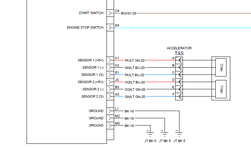
I don't know about 2024+ but through 2023 the TAS are analog signals generated by Hall effect sensors with no connection to the CAN bus.

This from the 2023 F3 Service Manual:

Screenshot 2026-07-24 071657.png

I don't have access to later service manuals. Perhaps someone with a later manual could check the wiring diagram. I'm curious to see if Can Am changed technology.
 
I don't know about 2024+ but through 2023 the TAS are analog signals generated by Hall effect sensors with no connection to the CAN bus.

This from the 2023 F3 Service Manual:

View attachment 256037

I don't have access to later service manuals. Perhaps someone with a later manual could check the wiring diagram. I'm curious to see if Can Am changed technology.
This is what I read too. I wasn't fully understanding the pre-2024 bikes, I just assumed there was some kind of polling sequence that was used rather than CanBus message and there was some D to A converter somewhere that the ECU could read at a set frequency. It made sense as the Pedal Box models changed at that product year boundary.

So I kind of looked at the Bosch logic that most matched the 2024+ models. This suggests the ECU and TAS. and hence Pedal Box, units were new devices.

Of course, my understanding might be wrong.
 
Old thread comes back to life. What I was thinking about a drag race is what is said in this post I am quoting below. That is, it will get a jump off the line, then as you go through the gears at full throttle, they will stay in the same position relative to each other on the track. Now out riding in the twisties, the PC will pull better coming out of corners just like at the start of a drag race. For me at my age, I am happy with the way a stock machine goes!

My friend's RT is stock and mine has the Pedal box. Side by side from a standing start I pull about 3 bike lengths. Then, we EXACTLY match speeds all the way to 90 mph. His bike never recovers the three bike lengths.
I'm with Ron on graphs. I will be getting my RT flashed when the warranty is up. For now, my Pedal box is the best thing since sliced bread. I only use 1/4 throttle travel compared to 3/4. At the end of the day, with older wrists, this vastly improves my ride quality.
Dennis
 
I cant find the throttle connector to hook in the pedal commander on my 2025 RT S2S. ANY help would be appreciated

Hi @SAMBILLIE

There are several helpful threads on here about PB install. Here's one:

https://www.spyderlovers.com/thread...nder-install-on-a-2025-rt.164736/post-1757000

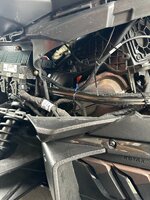
On the 2025 S2S, the connector is way in the center, forward of the gauges, and above the airbox. You will need to remove all the plastic panels on the left side to access it, and it's a tight fit to get your hands up in there to access it.

Here is a couple pics that might help.

IMG_2526.jpeg - IMG_2527.jpeg - IMG_2528.jpeg - IMG_2529.jpeg
 
Back
Top