• There were many reasons for the change of the site software, the biggest was security. The age of the old software also meant no server updates for certain programs. There are many benefits to the new software, one of the biggest is the mobile functionality. Ill fix up some stuff in the coming days, we'll also try to get some of the old addons back or the data imported back into the site like the garage. To create a thread or to reply with a post is basically the same as it was in the prior software. The default style of the site is light colored, but i temporarily added a darker colored style, to change you can find a link at the bottom of the site.

300 miles in temps over 105 with low humidity ... dangerous

Are you saying that the increase in average temperature between 1895 and 2026 was 4 degrees F?

And that somehow that's a huge difference?

And please provide links to the data you're using to claim that average temperatures have increased significantly over whatever period of time you choose.
One thing that they don't account for is that back in 1895, temperature sensors were installed near cities in relatively undeveloped areas. Over the years, cities expanded, replacing trees and grass with concrete and asphalt. Average temperatures rose, but they were no longer representative of the overall climate.

Sometimes the details are more important than the raw data.

A few things that I remind people of are that we used to have alligators here in Tennessee. The fossil record shows us this with no dispute. Yet we don't have them now. Why? It's too cold. Meaning that it was much warmer here in Tennessee in the past.

They discovered some very old mines in Europe in the last few years because areas that had been snowed in year around thawed out. What they found was miner's tools stacked neatly near the entrance. The miners would leave when the snow started to build up and return when it melted giving them access to the mouth of the mine again in the warmer months. But it got colder. The snow didn’t melt and the miners never returned. Over the years, the mines were forgotten.

All of this before the industrial age which has been blamed for the current changes in climate. We know that it has been both warmer and colder than it is now, worldwide. I just wish they would tell the whole story and let us reason things out instead of telling us what to think.
 
Last edited:
One thing that they don't account for is that back in 1895, temperature sensors were installed near cities in relatively undeveloped areas. Over the years, cities expanded, replacing trees and grass with concrete and asphalt. Average temperatures rose, but they were no longer representative of the overall climate.

Sometimes the details are more important than the raw data.

A few things that I remind people of are that we used to have alligators here in Tennessee. The fossil record shows us this with no dispute. Yet we don't have them now. Why? It's too cold. Meaning that it was much warmer here in Tennessee in the past.

They discovered some very old mines in Europe in the last few years because areas that had been snowed in year around thawed out. What they found was miner's tools stacked neatly near the entrance. The miners would leave when the snow started to build up and return when it melted giving them access to the mouth of the mine again in the warmer months. But it got colder. The snow didn’t melt and the miners never returned. Over the years, the mines were forgotten.

All of this before the industrial age which has been blamed for the current changes in climate. We know that it has been both warmer and colder than it is now, worldwide. I just wish they would tell the whole story and let us reason things out instead of telling us what to think.
But we did not live in those times~~~. We have to live, work, play, etc with what we have now. Talking about other times does not help with what the globe is now facing with people trying to live on a very large amount of it.
 
But we did not live in those times~~~. We have to live, work, play, etc with what we have now. Talking about other times does not help with what the globe is now facing with people trying to live on a very large amount of it.
Thanks. Much appreciate your help getting this discussion back on track.
 
Are you saying that the increase in average temperature between 1895 and 2026 was 4 degrees F?

And that somehow that's a huge difference?

And please provide links to the data you're using to claim that average temperatures have increased significantly over whatever period of time you choose.
I got it from playing around with 12 month average temperatures going back to 1895 with the NOAA calculator and plotting the data. You can set US wide and whether you are looking at a particular month or a prior 12 month period. It will plot the data for you. Other agencies all over the globe record changes too, some significantly greater such as North Africa and Western Europe, some less significant. The common factor though are the changes tend to higher temperature changes, seasonal drift, rain fall changes and so on. Similar tools provided by the European Environment Agency (EEA), the UK Met Office, the Copernicus Climate Change Service (C3S)/European Center for Medium-Range Weather Forecasts (ECMWF) and other noted organizations across the globe actually show very similar results which is good to know the data is fairly accurate and validated.

https://www.ncei.noaa.gov/access/mo...e/national/time-series/110/tavg/1/8/2020-2026

4F might not seem like a lot, but it doesn't take average temperatures to vary by that many degrees to make it possible or impossible to grow certain crops in certain regions. The extra energy in the atmosphere actually becomes significant. It can also affect rainfall patterns and jet stream movement. It affects and is affected by ocean temperatures too, so for places that rely on the gulf stream may experience climate changes and not necessarily warming. Of course it has a measurable affect on Glaciers well as Arctic and Antarctic ice packs. We have adapted in some ways to these changes by developing changes in the genetic makeup of our crops to make them more temperature increase and drought resistant. Without these changes many of our crop yields would have been much lower.

If you look at the year of 1816, the "Year Without a Summer" after the Mount Tambora eruption of 1815 which spilled huge quantities of ash into the atmosphere, the annual average temperature of the US fell about 2F to 4F, yet most of that growing season's harvest's failed. Global famines were recorded for the two or three years following 1816. That all from a mere 4F lowering of average annual temperatures.

Changes of 4F average over a large continent like the US will have knock on effects in northern hemisphere changes. Note, this is changes. Not everywhere will experience warmer climates, some regions of the globe might experience lowered temperatures. It's change that is the significant word here.

Oh, b*gger, I'm way of topic here. DM me if you want more? Sorry everyone...

Now, are these changes man-made or part of the normal earth's natural climate changes over geological timescales? I don't want to debate that because everyone probably has their opinions and I for one don't have a scientific answer, I'm not a climatologist. We have similar data for CO2 concentrations, ocean temperatures and levels, sea water salinity and pH, and even solar activity. In countries like the UK and the EU we have accurate data going back 400 years or more to the time of Sir Isaac Newton and the Royal Society. The data is there and historically accurate as it is easy to measure. The science as to why is a whole different matter.

All we can say is that the measured temperate averages for the US as a whole has increased in average annual temperature by about 4F since 1895. Utah has seen a higher change of over 6F. These numbers rise and fall in the short term, i.e. year to year, but over the past 125 years we have seen a gradual increase in temperature that is slowly increasing in the rate of change, i.e. the average increase is not a straight line but is a shallow curve upwards over 125 years. The rate of change is greater now than it has ever been if we smooth the line.

So, that's the raw data. Like I say, the explanations behind it are for the climatologists, the chemists, weather scientists and the sophisticated computer modellers to figure out. I have a PhD with a background in computer modelling but I would even begin to know how to model climate changes.

 
Last edited:
I hate to enter this climate discussion when all we want to do is ryde our Spyders. There is a factor that has not been mentioned to this point in the discussion. That is world POPULATION.
In the 1890's population was about 1.5 billion. Now it's over 8.2 billion. Of course, humans have affected the temperature of the earth
We do live under a variable class of STAR. Wouldn't be here at all without it. The earth has gone through numerous warm and cold cycles.

The earth has been coming out of its last ice age event for about 14,000 years. It always takes thousands of years for the earth to come out of an ice age. The global time scale is a long and slow one.

Just bringing up a few things to consider in this climate discussion, not trying to **** on anyone's parade. All we really want to do here is ryde our Spyders (and a poor, old, slow V-Max in my case).

So, RYDE MORE, WORRY LESS!
 
Lew, it was NEVER my intent for this to be a discussion about climate change. My intent was to provide a ride report and describe the horrendously hot and dangerous conditions that we barely survived.

I see no value here in attributing blame or causation to this warming world, only in recognizing it for what it is, the effect it's having on our favorite activity, and how to protect against it.

As always, though, I appreciate and value your thoughts, my friend.
 
Several years ago, I got very concerned about heat related issues and hydration. I found guy in St. George Ut who makes a carrier for a one gallon jug that will mount on a motorcycle. I have an Ozark Trails (Walmart) one gallon insulated jug that I fill half with ice and half water. It has a long hose running from the jug to me and a bite valve. I can suck on water every few minutes and that really helps. Also, while on the road I don't drink anything but water. I save the soda for end of day when I am off the Spyder. If you ever watch a documentary on the Bedoin (sp?) tribes of the African and Near Eastern deserts, you will see them dressed in heavy robes in the desert heat. I wear a Kilimanjaro jacket in silver (reflects heat) for the same reason, it covers skin and insulates from sun and heat. This set up has helped me in the worst of Wyoming and the West in general heat. This won't work all the time or for everybody, but it has worked for me.
I remember in my younger days, before we had electronics, filling my helmet with water, putting it on, and letting the water flow over me to cool me down, then doing it again in 2 hours. Oh for the days of youth.
 
Last edited:
It really doesn't matter what our beliefs are on warming. We do or don't according to those thoughts. But we can talk about what we have found to help us survive on a motorcycle when we need ride in extreme heat. Thanks Pete for this report. Most of us are older, and have a condition or meds that make us more suseptible to heat. Any ideas we can get from a discussion like this may save a life.
 
Well, Pete, global warming results from the Earth's precession as it revolves around the Sun. Nothing we can do about that one. However, in the short term, hydrate with good ol water, use a hydration pack, and a cooling vest. And the fellow who mentioned wearing your leathers knows what he's talking about. Short hops: rehydrate often, take your time, and enjoy the trip. Safety first.
 
Thank you, Lew and Paul, I appreciate you both. One of my fondest memories is when we all met up in Fairview(?) for lunch. That's when Jane had trouble with her Spyder ignition that had us flummoxed for a while.
 
I remember that meet and greet. That was the first time I got to put faces on forum names and a real fun experience. That restaurant has closed, reopened, and changed hands several times. It seems to be doing pretty good now. I realy like forum members posting their ride experiences or when we can meet up like that. And a belated thank you to you both for taking the time to make that happen.
BTW I don't remember, what was the problem with Jane's ignition? Did it get you home anyway or were you able to fix it on the road?
 
I returned from D3WR Saturday night. The thermometer on the Spyder read 102* we stopped every 2 hours in a cool building for and hour,had my MotoJug stuffed full of ice and water and drank a couple of Pedialyte drinks. I have not used those type of drinks before but they really seemed to help. We came thru Kamas on the way to Provo Canyon and home. I was thinking about you,Pete. Glad you made it home OK. Bad stuff this heat.
Sorry for the warming atmosphere distraction. My brain wanders off into the ozone sometimes. The older I get the more distracted I get.

According to the CDC/NIOSH approaching 1.4 liters per hour of water can put an average size man at risk of Hyponatremia (Sodium dilution in the bloodstream) in extreme heat. It can be worse for older folks like me, with advancing kidney failure. After about 1 liter of water I've found a bottle of Pedialyte is good, but still over 1.5 liters of total fluids per hour can be problematic.

I drank too much water hiking in Arches NM in the heat a couple of years ago and was really sick. She had to take me to the Moab clinic and they clued me in to that is wasn't heat stroke I was suffering from. My wife has to monitor how much water I drink in the extreme heat and I too find the Pedialyte really helps.

Utah summers can be brutal.
 
I didn't know about Pedialyte before. Here is what Google says about it

Pedialyte is an over-the-counter oral rehydration solution scientifically formulated to quickly and effectively restore vital fluids and essential electrolytes lost from dehydration. [1, 2, 3]

What Is Inside
    • Key Electrolytes: Contains sodium, potassium, and chloride to help control fluid balance in the body. [1, 2]
    • Balanced Sugar: Uses a precise amount of glucose (sugar) to help the body absorb fluids faster than water alone. [1]
    • Comparison: Features roughly 2 to 3 times the electrolytes and about one-half to one-fourth the sugar of leading sports drinks.

I remember that meet and greet. That was the first time I got to put faces on forum names and a real fun experience. That restaurant has closed, reopened, and changed hands several times. It seems to be doing pretty good now. I realy like forum members posting their ride experiences or when we can meet up like that. And a belated thank you to you both for taking the time to make that happen.
BTW I don't remember, what was the problem with Jane's ignition? Did it get you home anyway or were you able to fix it on the road?
My recollection is that my 5' wife managed to snap off the key in the ignition trying to lock the bike before going into the restaurant. Now you know why I'm so meek and mild.
 
I think since the ignition was in the On position when it broke off, by holding the fob part close, we were able to start it. When we got back home, the dealer replaced the assembly under the extended warranty. That's what I remember anyway.
 
I didn't know about Pedialyte before. Here is what Google says about it

Pedialyte is an over-the-counter oral rehydration solution scientifically formulated to quickly and effectively restore vital fluids and essential electrolytes lost from dehydration. [1, 2, 3]

What Is Inside
    • Key Electrolytes: Contains sodium, potassium, and chloride to help control fluid balance in the body. [1, 2]
    • Balanced Sugar: Uses a precise amount of glucose (sugar) to help the body absorb fluids faster than water alone. [1]
    • Comparison: Features roughly 2 to 3 times the electrolytes and about one-half to one-fourth the sugar of leading sports drinks.


My recollection is that my 5' wife managed to snap off the key in the ignition trying to lock the bike before going into the restaurant. Now you know why I'm so meek and mild.

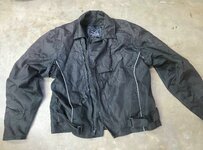
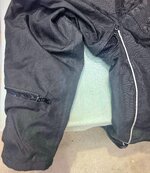
So glad you guys were ok. Riding long distance in the heat can be brutal. Our last few trips (on the Harley B4 the Spyder) we had to go through the Mojave Desert in heat that was 107+. We originally tried just the wet vests and found they worked well for a short time, then evaporated very quickly (at times within 10 – 15 mins) and we were hot again. What we found that really works well is vented jackets over the wet vests. We soaked the vests and put them in Ziplock baggies in the saddle bags until we need them. When it gets hot, we put the vest on dripping wet. Then put our vented jackets over the vests and open the zipper vents up on the sleeves, the under arms and the one in the back. This actually acts like a swamp cooler with the air rushing through the vents and out the back. The vest & your body stays cool for at least 30+ mins (depending on how hot and humid it is) and you’ll know when the vest starts to dry out. We bring a small container of water with us to hydrate the vests again and in doing so we find shade and drink lots of water. The next time we stop, it’s at a fast food or gas station with an air conditioner, and we chill there for a bit. Then we soak the vests in the restroom sink, fill the container, and we are off again. We found these jackets at Arizona Bike week. Yes, you are so correct regarding the Electrolytes in the water or drinking Gatorade.

This was a life saver on our trip, and should be, especially when you’re traveling through the Mojave to the Interstate 40 and up. Actually, parts of the I-5 and the 99 are pretty brutal too. The one thing I don't miss is sitting on that air cooled Harley in high heat. It's like riding a toaster oven. Hope this helped

1000019843.jpg .1000019841.jpg
 
Last edited:
Back
Top